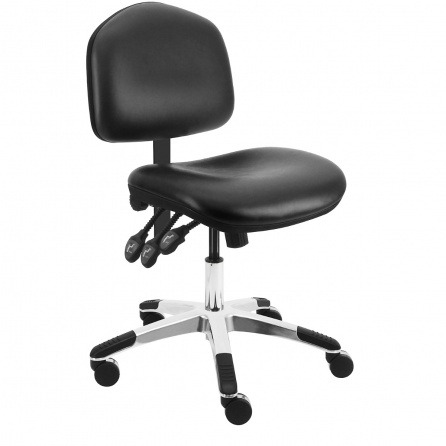
When you work in a controlled environment, every piece of equipment can affect cleanliness, safety, and process consistency. Your seating choice is no exception. A standard office chair may release particles, absorb contaminants, or use materials that are difficult to clean. In contrast, Cleanroom Chairs are designed specifically for environments where contamination control matters.
Whether you operate a pharmaceutical laboratory, semiconductor facility, medical device manufacturing area, electronics production unit, or research laboratory, choosing the right chair helps you maintain a cleaner and more efficient workspace. This guide explains the essential features you should evaluate and shows you how to select seating that fits your cleanroom requirements.
What Are Cleanroom Chairs?
Cleanroom chairs are specialized seats designed for controlled environments where airborne particles, microbial contamination, static electricity, and chemical exposure must be carefully managed.
Unlike conventional office seating, cleanroom-compatible chairs typically use smooth, non-shedding surfaces and materials that can withstand frequent cleaning. Their construction minimizes areas where particles can collect and makes routine sanitation easier.
You should select your chair according to the cleanliness classification, work process, cleaning procedures, and ergonomic requirements of your facility.
Why Cleanroom Seating Matters
Your chair is in constant contact with operators and remains inside the controlled environment for extended periods. If its materials deteriorate, shed particles, or are difficult to disinfect, the chair can become a source of contamination.
A suitable cleanroom chair can help you:
- Reduce particle generation.
- Support contamination-control procedures.
- Maintain a more hygienic workstation.
- Improve operator comfort during long shifts.
- Reduce cleaning and maintenance difficulties.
- Support ergonomic working positions.
- Address static-control requirements where necessary.
You should therefore treat seating as part of your cleanroom equipment rather than as ordinary office furniture.
Key Features to Look For
1. Low-Particle Construction
Look for chairs constructed from materials that resist particle shedding and deterioration. Smooth surfaces are particularly useful because they provide fewer places for dust and contaminants to accumulate.
Avoid seating with exposed foam, loose fabric, or materials that can easily break down under repeated cleaning.
2. Easy-to-Clean Surfaces
Your cleanroom chair should tolerate regular cleaning and disinfection. Non-porous surfaces are generally easier to wipe down than conventional upholstery.
Before purchasing, check the manufacturer’s cleaning recommendations. Make sure the chair can withstand the disinfectants, cleaning agents, and procedures used in your facility.
3. Chemical Resistance
If you work with solvents, disinfectants, acids, or other chemicals, material compatibility becomes important. A chair that cannot withstand your cleaning or production environment may deteriorate prematurely.
Review the material specifications and chemical-resistance information before making your selection.
4. Ergonomic Adjustability
Cleanroom control does not mean you have to sacrifice operator comfort. You should look for ergonomic features such as adjustable seat height, appropriate back support, and a comfortable seat design.
Proper adjustment helps you maintain a suitable working posture and can reduce discomfort during repetitive or extended tasks.
5. Static Control
Electrostatic discharge can damage sensitive electronic components and create process concerns in some controlled environments. If electrostatic control is part of your facility’s requirements, choose seating specifically designed for static-dissipative or ESD-controlled applications.
Check the manufacturer’s electrical specifications rather than assuming that a chair is ESD-compatible simply because it is marketed for cleanroom use.
6. Durable Construction
Your chair should withstand frequent movement, repeated cleaning, and continuous use. Strong frames, reliable adjustment mechanisms, and durable casters can improve service life.
Consider how many hours the chair will be used each day. A chair intended for occasional laboratory work may not provide the durability required for continuous production operations.
7. Suitable Casters and Bases
The chair’s base and casters should match your flooring and cleanroom requirements. Smooth-rolling, cleanroom-compatible casters can make movement easier while reducing the risk of damaging the floor.
You should also consider whether your operators need a mobile chair or a stationary design. Unnecessary mobility may not be appropriate for every workstation.
How to Choose the Right Cleanroom Chair
Assess Your Cleanroom Classification
Start by identifying the cleanliness requirements of your workspace. Different environments have different particle-control expectations.
Do not select a chair solely because its product description contains the term “cleanroom.” Review its specifications and determine whether its construction is appropriate for your actual operating conditions.
Review Your Cleaning Process
Think about how often you clean and disinfect the chair. If your facility performs frequent sanitation, select materials designed to withstand repeated exposure to the cleaning products you use.
Ask yourself:
- How frequently will the chair be disinfected?
- Which cleaning agents will be used?
- Are aggressive chemicals involved?
- Can all chair surfaces be accessed easily?
- Are replacement components available?
These questions can help you avoid selecting a chair that looks suitable but performs poorly under real operating conditions.
Consider Operator Requirements
Your operators may spend several hours sitting at the same workstation. An uncomfortable chair can affect concentration, productivity, and overall working experience.
Evaluate seat height, back support, adjustability, workstation height, and operator reach. The best design should support both contamination control and practical daily use.
Check Space and Workflow
Consider the available floor space before selecting a chair. A large chair may restrict movement in a compact cleanroom workstation, while an overly small design may compromise operator comfort.
You should also assess how operators move between workstations. Choose a chair that supports your workflow without creating unnecessary obstacles.
Verify Material Compatibility
Material selection should reflect your actual environment. Check compatibility with chemicals, disinfectants, temperature conditions, humidity, and other operating factors.
If you are unsure which construction is appropriate, consult a qualified supplier and provide details about your cleanroom, cleaning process, and application.
Cleanroom Chairs for Different Applications
Cleanroom seating can be used across several industries and applications.
Pharmaceutical Manufacturing
You can use cleanroom-compatible chairs in controlled production, inspection, formulation, and packaging areas where contamination prevention is important.
Medical Device Manufacturing
Manufacturers may require specialized seating for assembly, inspection, testing, and other controlled operations. Easy-to-clean materials can simplify routine sanitation.
Semiconductor and Electronics Manufacturing
In electronics environments, particle control and electrostatic protection may both be important. You should select a chair that meets the facility’s specific ESD and contamination-control requirements.
Laboratory Environments
Research and testing laboratories can benefit from adjustable cleanroom seating that supports operators while remaining compatible with regular cleaning procedures.
Common Mistakes to Avoid
Choosing a chair based only on appearance or price can create problems later. You should avoid several common mistakes.
Ignoring cleaning requirements: A chair may appear suitable but fail when exposed repeatedly to your cleaning chemicals.
Overlooking ergonomics: Contamination control is important, but uncomfortable seating can negatively affect operators.
Assuming all cleanroom chairs are identical: Different chairs have different particle, chemical, electrical, and durability characteristics.
Failing to check replacement parts: Ask whether casters, cushions, mechanisms, and other components can be replaced when needed.
Choosing without considering the workstation: The chair should work with your benches, equipment, floor space, and operator workflow.
Maintenance Tips for Cleanroom Chairs
Regular maintenance helps you preserve both cleanliness and performance. Follow your facility’s approved cleaning procedure and the manufacturer’s instructions.
Inspect the chair periodically for cracks, damaged surfaces, loose components, worn casters, or deteriorating materials. Replace damaged parts promptly if they could compromise cleanliness or safety.
Avoid using unapproved cleaning chemicals. Even durable materials can deteriorate when exposed to incompatible substances.
Keep maintenance records when your quality system requires documented inspections or servicing. Consistent monitoring makes it easier to identify wear before it becomes a larger operational problem.
Why Work With a Reliable Supplier?
The right supplier can help you compare materials, configurations, ergonomic features, and cleanroom requirements before you purchase. When reviewing Global Lab Supply, consider the specifications of each seating option and match them to your facility rather than choosing solely by price.
You should also provide your supplier with relevant application details, including cleanroom classification, cleaning chemicals, operating conditions, expected usage, and any ESD requirements. This information makes it easier to identify an appropriate solution.
If you need help determining which seating configuration fits your application, use the Contact Us option to discuss your requirements with the supplier before placing an order.
Final Selection Checklist
Before you purchase cleanroom seating, confirm that the chair:
- Meets your cleanroom requirements.
- Uses appropriate low-particle materials.
- Can withstand your cleaning and disinfecting process.
- Provides adequate chemical resistance.
- Offers suitable ergonomic adjustment.
- Meets applicable ESD requirements when necessary.
- Fits your workstation and available floor space.
- Provides appropriate durability for your usage level.
- Has suitable casters and floor compatibility.
- Can be maintained and serviced effectively.
A well-selected chair supports more than operator comfort. It becomes part of your contamination-control strategy, workplace ergonomics, and long-term facility efficiency. By evaluating cleanliness, materials, chemical compatibility, ergonomics, durability, and workflow together, you can choose seating that performs reliably in your controlled environment.
Frequently Asked Questions
1. What makes a chair suitable for a cleanroom?
A cleanroom chair typically uses low-particle, durable, and easy-to-clean materials. Depending on the application, it may also provide chemical resistance, ergonomic adjustment, and static-control properties. Always verify the manufacturer’s specifications against your facility’s specific cleanroom and operational requirements.
2. Are cleanroom chairs easy to disinfect?
Many cleanroom chairs are designed with smooth, non-porous surfaces that simplify cleaning and disinfection. However, you should confirm that the chair’s materials are compatible with the disinfectants and cleaning agents used in your facility before purchasing.
3. Do cleanroom chairs need to be ESD safe?
Not every cleanroom requires ESD-safe seating. If you handle sensitive electronic components or operate an ESD-controlled process, choose a chair specifically designed for static dissipation and verify its electrical specifications with your facility requirements.
4. How do you maintain cleanroom chairs?
Follow your facility’s approved cleaning procedure and the manufacturer’s maintenance instructions. Regularly inspect surfaces, casters, adjustment mechanisms, and other components for damage or wear. Replace deteriorated parts promptly to maintain cleanliness, safety, and performance.
5. How should you choose a cleanroom chair?
Start with your cleanroom classification, cleaning process, chemical exposure, ESD requirements, operator needs, and available workspace. Compare material compatibility, ergonomics, durability, and maintenance requirements before selecting a model that matches your application.