
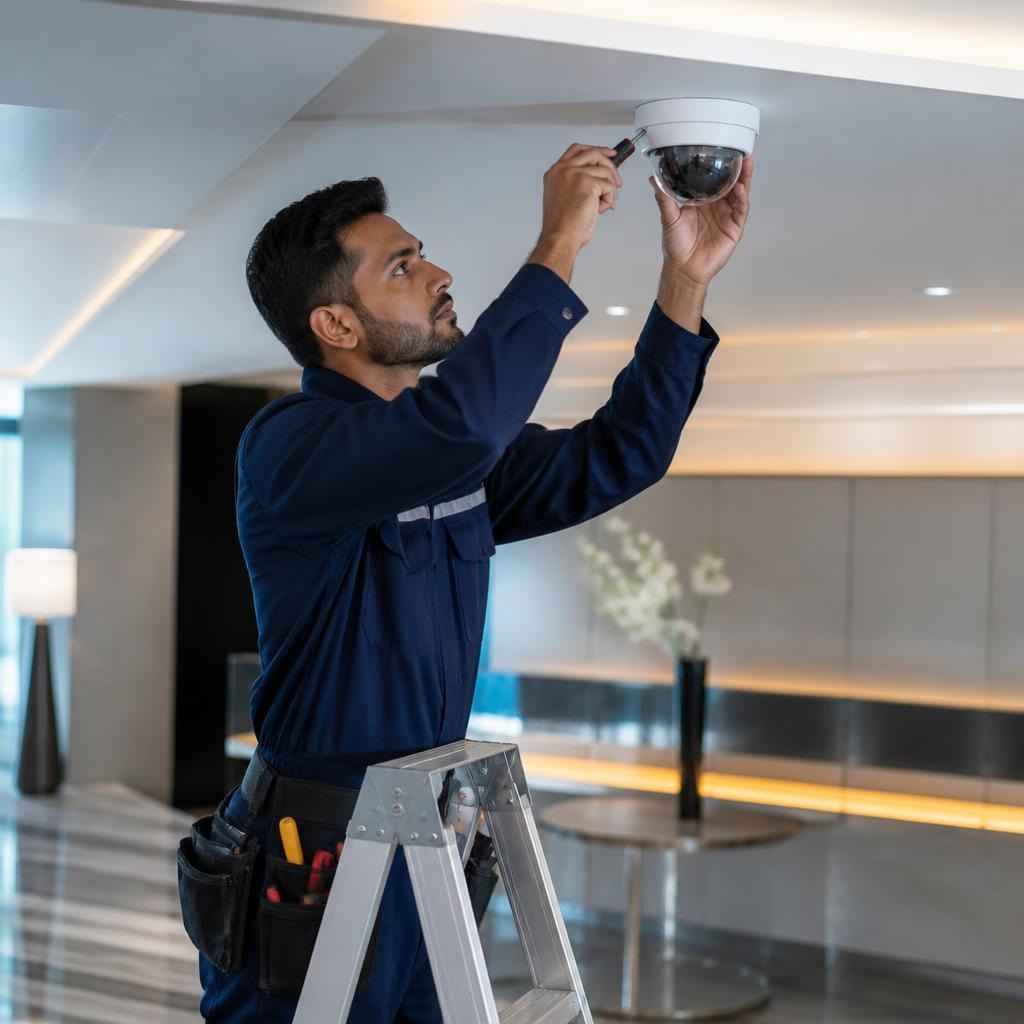
Choosing the right CCTV company in Dubai is an important step in protecting your business, employees, customers, and property. Whether you manage an office, retail store, warehouse, residential building, hotel, or commercial facility, a reliable surveillance system helps you monitor activities, identify potential security risks, and respond to incidents more effectively. However, the quality of your security depends on more than the cameras you install. You also need professional planning, correct equipment selection, reliable installation, and ongoing technical support.
Dubai has a wide range of security service providers, making it essential to evaluate your options carefully. Before investing in a surveillance system, consider the provider’s experience, technical capabilities, product quality, installation standards, maintenance services, and understanding of local requirements.
This guide explains the key factors you should evaluate when selecting a CCTV company in Dubai so you can make an informed decision and choose a solution that meets your security needs.
1. Evaluate Industry Experience and Technical Expertise
Start by reviewing the company’s experience in CCTV installation and security system integration. An experienced provider is more likely to understand different property layouts, common surveillance challenges, and the technical requirements of commercial and residential environments.
Your security requirements may vary depending on the property. A warehouse may need cameras covering loading bays and storage areas, while an office may require monitoring at reception areas, entrances, corridors, and restricted-access rooms.
When assessing a provider, ask about:
- Previous projects involving properties similar to yours.
- Experience with different CCTV technologies and recording systems.
- Expertise in IP cameras, network video recorders, and remote monitoring.
- Ability to design systems for small premises and large commercial facilities.
- Availability of qualified installation and technical support personnel.
Ask the company to explain how it would address your specific security challenges. A professional provider should be able to recommend suitable equipment and explain the reasons behind its recommendations.
2. Check Licensing and Compliance Requirements
Before hiring a CCTV installation provider, confirm that it has the appropriate business approvals and security-related authorisations required for the work it performs in Dubai. Depending on the project, additional requirements may apply to equipment, installation, and system configuration.
You should also understand the applicable CCTV regulations and privacy obligations for your property. Requirements can vary according to the premises, industry, and location, so avoid assuming that one set of rules applies to every installation.
Ask your shortlisted company to clarify:
- Which approvals or permits apply to your project.
- Whether the proposed installation meets applicable local requirements.
- What documentation is needed before installation begins.
- How camera placement and footage handling will address privacy considerations.
- Whether inspections or approvals are required before the system becomes operational.
If your property is subject to specific regulatory requirements, verify them with the relevant Dubai authority or a qualified compliance professional. Confirming these details early can help you avoid unnecessary delays and costly modifications.
3. Assess the Quality of CCTV Equipment
Camera quality directly affects the usefulness of your surveillance system. A camera may record continuously, but poor image quality, unsuitable lighting performance, or incorrect positioning can make important details difficult to identify.
When selecting a CCTV company, ask about the equipment it recommends and whether it matches your property’s actual conditions.
Consider the following features:
- Resolution: Higher resolution can capture more detail, particularly in larger areas, although lens quality, lighting, and camera placement also matter.
- Night vision: Infrared or low-light cameras can improve visibility in poorly illuminated areas.
- Wide dynamic range: This feature can help manage scenes containing both bright and dark areas, such as entrances exposed to sunlight.
- Weather resistance: Outdoor cameras should have suitable protection against dust, heat, moisture, and other environmental conditions.
- Storage capacity: Recording systems should retain footage for the period your operational and legal requirements demand.
- Remote viewing: Secure mobile or desktop access can help authorised users monitor their premises when away.
Do not choose equipment based on specifications alone. Ask for a demonstration or a clear explanation of how the proposed cameras will perform in your environment.
4. Look for a Site-Specific Security Assessment
A reliable CCTV company should evaluate your property before recommending a complete surveillance solution. A generic package may leave blind spots, duplicate coverage in some areas, or provide insufficient detail where it matters most.
During a site assessment, the provider should examine entrances, exits, parking spaces, reception areas, stairways, corridors, storage rooms, and other locations that require monitoring. It should also consider lighting conditions, existing network infrastructure, camera mounting positions, and recording equipment placement.
You can make this process more effective by preparing a list of your security concerns before the assessment.
For example, identify areas where unauthorised entry is possible, locations where valuable equipment is stored, and points where incidents have occurred previously. Ask the provider to explain how its design will address each concern.
A detailed proposal should include recommended camera locations, approximate coverage, equipment specifications, storage requirements, installation work, and any additional infrastructure needed. This makes it easier to compare proposals fairly and understand what you are paying for.
5. Compare Installation Standards and Workmanship
Even high-quality cameras may perform poorly when they are installed incorrectly. Camera angles, cable routing, network configuration, power supply, and recording settings all influence system reliability.
Choose a company that follows a structured installation process and tests the system before handover.
Your installation checklist should include:
- Secure mounting and suitable camera positioning.
- Neat, protected cable routing where applicable.
- Reliable power and network connections.
- Correct recording schedules and storage configuration.
- Secure access permissions and password settings.
- Testing of live views, playback, alerts, and remote access.
- Clear instructions for operating the system.
Ask whether the company provides a handover session after installation. You and your staff should know how to review footage, export recordings, manage authorised accounts, and report technical problems.
You should also request system documentation, including relevant equipment details, configuration information, and warranty records. Proper documentation makes future maintenance and upgrades easier.
6. Evaluate Data Security and Privacy Protection
Modern CCTV systems often connect to business networks, mobile applications, or cloud-based services. These connections improve accessibility but can also introduce cybersecurity risks if the system is poorly configured.
Before selecting a provider, ask how it protects recorded footage and prevents unauthorised access. Security should be considered during system design rather than added only after installation.
Important safeguards include strong passwords, individual user accounts, restricted permissions, secure remote access, firmware updates, and appropriate network protection. Where supported, multi-factor authentication can provide another layer of protection.
You should also establish who can view or export footage, how long recordings are retained, and how they are securely deleted when no longer required. Camera placement should respect applicable privacy rules and avoid unnecessary monitoring of private areas.
If your CCTV system connects to an existing business network, discuss network segmentation and access controls with your IT team. A well-designed surveillance solution should support your physical security objectives without creating avoidable risks for your wider IT infrastructure.
7. Review Maintenance and Technical Support Services
CCTV systems require ongoing attention to remain effective. Cameras may become dirty, connections can fail, storage devices may develop faults, and software may require updates.
When comparing providers, find out what happens after installation. A company that offers dependable maintenance can help you identify issues before they affect important recordings.
Ask whether maintenance services include:
- Periodic camera and connection inspections.
- Lens cleaning and image-quality checks.
- Recording and playback verification.
- Storage health monitoring.
- Software and firmware updates where appropriate.
- Troubleshooting and replacement of faulty components.
- Emergency support and clearly defined response times.
Review the maintenance agreement carefully. Check whether visits are scheduled, spare parts are included, emergency callouts carry additional charges, and support is available outside standard business hours.
For businesses that rely heavily on surveillance, a suitable maintenance plan can reduce unexpected downtime and help preserve consistent coverage across the property.
8. Understand Pricing, Warranties, and Contract Terms
Cost is an important consideration, but the cheapest quotation may not deliver the best long-term value. Two proposals with similar prices may differ significantly in camera quality, storage capacity, installation work, warranty coverage, and technical support.
Request an itemised quotation so you can see exactly what is included. Your comparison should account for cameras, recording devices, storage, cables, mounting accessories, network equipment, labour, configuration, training, and maintenance.
Clarify whether the quotation includes any applicable taxes, additional installation work, or future service charges. Ask about warranty periods for both equipment and workmanship, along with the procedure for handling defective components.
You should also understand the expected costs of expanding the system later. A scalable design may allow you to add cameras, increase storage, or integrate additional security devices without replacing the entire installation.
Choose a provider that explains costs transparently and helps you balance your budget with your actual security requirements.
9. Check Customer Reviews and Project References
Customer feedback can help you assess whether a CCTV provider delivers on its promises. However, do not rely exclusively on online ratings. Look for detailed feedback about installation quality, communication, punctuality, troubleshooting, and after-sales support.
Where possible, request references from customers with similar properties or security needs. Ask how the provider handled technical issues and whether the installed system continues to perform as expected.
You can also review the company’s website, project portfolio, and service descriptions to understand its capabilities. Look for evidence of relevant experience rather than relying on broad marketing claims.
A dependable company should answer technical questions clearly, explain its limitations honestly, and provide realistic expectations about installation timelines and system performance.
10. Consider Integration and Future Expansion
Your security requirements may change as your business grows. You might add office space, expand a warehouse, open another retail location, or introduce access control and alarm systems.
For this reason, ask whether the proposed CCTV solution can integrate with other security technologies. Depending on compatibility and project requirements, this could include access control, video intercoms, intrusion alarms, or centralised monitoring.
Also consider whether the system supports additional cameras, expanded storage, and secure remote access for authorised personnel. Discuss compatibility before purchasing equipment, particularly if you already have cameras or recording devices installed.
Planning for future expansion helps you avoid unnecessary replacement costs and gives you greater flexibility as your property and operational needs evolve.
Why Choosing the Right CCTV Company in Dubai Matters
Selecting a CCTV provider is not simply a purchasing decision. It is an investment in the safety, visibility, and day-to-day management of your premises. The right company should understand your risks, recommend appropriate equipment, install the system professionally, and remain available when support is needed.
As you compare options, prioritise technical expertise, relevant approvals, reliable products, transparent pricing, cybersecurity, and long-term service. Request a site assessment and compare detailed quotations before making your final decision.
If you are looking for a professional CCTV company in Dubai, explore the security solutions offered by Netcom System Solution LLC and evaluate how its services align with your property’s requirements. Choose a solution based on your actual coverage needs, operating environment, and long-term maintenance expectations rather than price alone.
Frequently Asked Questions
1. What should you check before hiring a CCTV company in Dubai?
Check the company’s relevant approvals, experience, equipment quality, installation process, warranty terms, maintenance services, customer references, and understanding of applicable local requirements. Request a site assessment and an itemised quotation before committing.
2. How much does CCTV installation cost in Dubai?
The cost depends on the number and type of cameras, recording and storage requirements, property size, cabling, network infrastructure, and installation complexity. Request an itemised quotation based on a site assessment for a more accurate estimate.
3. Which CCTV camera is best for commercial properties?
The best camera depends on your location and monitoring objectives. High-resolution IP cameras may suit detailed monitoring, while weather-resistant or low-light models may be better for outdoor areas. Your provider should assess lighting, distance, and coverage requirements.
4. Why is CCTV maintenance important?
Regular maintenance helps identify faulty cameras, damaged connections, storage problems, and recording failures. It also supports consistent image quality and system reliability, helping you maintain effective surveillance when an incident occurs.
5. Can you access CCTV footage remotely?
Yes. Many modern CCTV systems support remote viewing through secure mobile applications or computer interfaces. Your provider should configure authorised access, strong authentication, and suitable network protections to reduce the risk of unauthorised viewing.
Final Thoughts
Finding the right CCTV company in Dubai requires you to look beyond equipment prices and promotional offers. Focus on a provider that can assess your property, design suitable camera coverage, install the system correctly, protect recorded footage, and provide dependable technical support.
By following these factors, you can make a more informed decision, reduce avoidable costs, and build a surveillance system that supports your security objectives over the long term.


