Electronics manufacturing has evolved significantly over the past decades. Devices are becoming smaller, lighter, and more complex. At the same time, expectations related to performance and reliability continue to increase. As a result, manufacturers are constantly looking for ways to improve assembly methods without compromising quality or consistency.
Selecting the right materials is another important aspect taken into consideration. Engineering teams frequently evaluate different options before integrating them into a product. They may even research topics such as what is Thinsulate to better understand whether certain materials offer the properties required for a specific project. This careful evaluation helps ensure that each component contributes to the intended performance of the final product.
In this environment, adhesive material conversion has become a key part of modern electronics assembly. Beyond simply joining surfaces, converted components can support protection, insulation, vibration management, and more efficient integration within sophisticated devices.
Smaller devices require greater precision
As electronic products become more compact, the margin for error during assembly decreases. Components must fit within limited spaces, often alongside sensitive circuits and multiple functional elements. In these situations, processes such as die cutting make it possible to develop adhesive components adapted to exact dimensions and application requirements.
Some of the priorities in electronics assembly also include:
- Accurate positioning of components
- Consistency throughout production
- Compatibility with various surfaces
- Support for automated assembly processes
Precision isn’t only about achieving the correct shape. It also involves maintaining consistency across production runs and ensuring that the parts can be integrated into repetitive assembly processes. Even minor dimensional variations may influence positioning or require additional interventions during production.
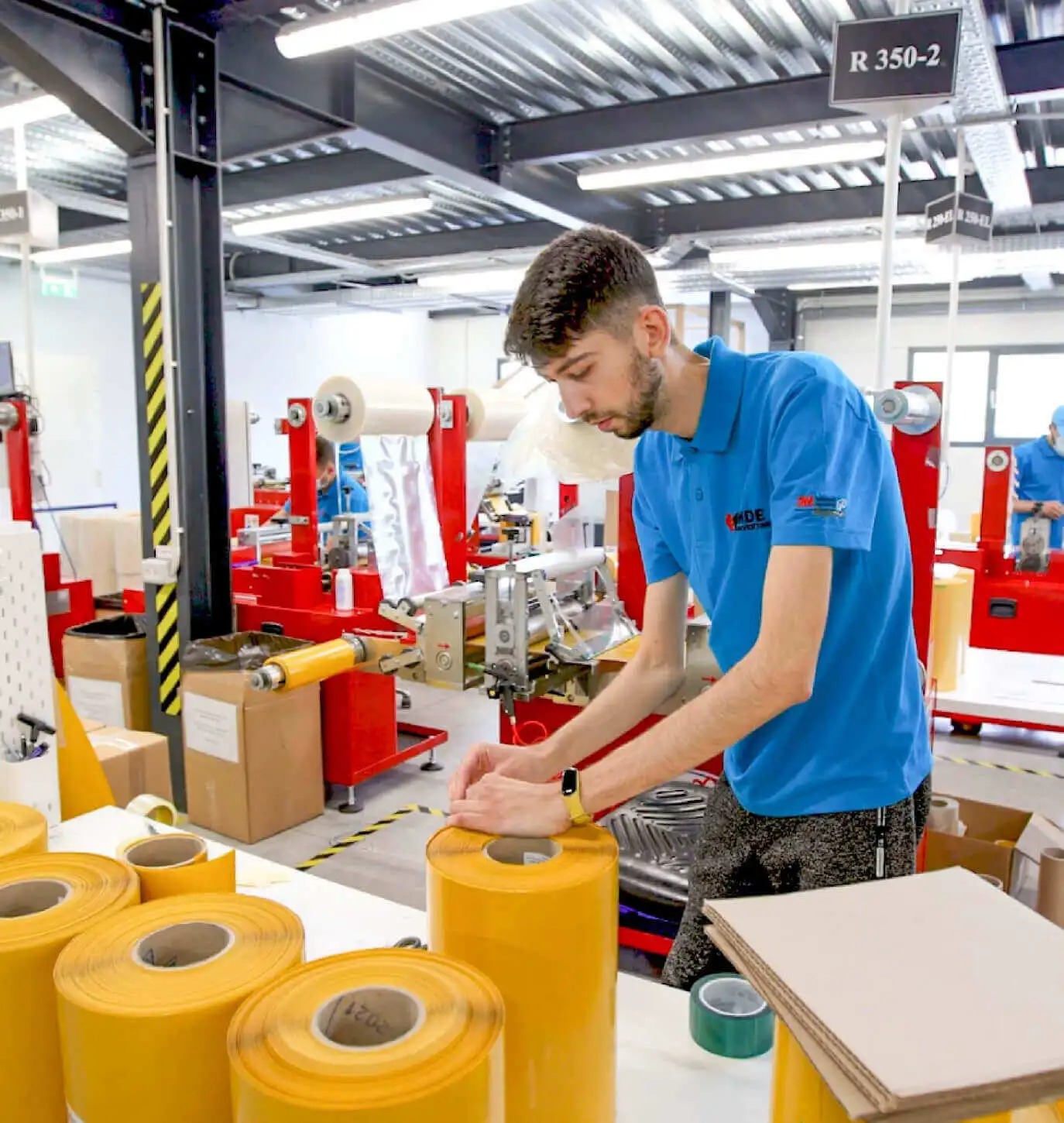
This is one of the reasons why manufacturers often choose to collaborate with experienced partners. Companies working with a 3M Preferred Converter frequently value not only access to advanced materials, but also the expertise required to develop solutions adapted to demanding applications.
Assembly today means more than joining parts
The role of adhesive elements in electronics has expanded considerably. In many applications, they contribute to multiple functions simultaneously rather than serving only as fastening solutions. For example, they may help support thermal management or protect delicate elements from environmental influences.
Here are some functions frequently associated with custom adhesive solutions:
- Vibration damping
- Electrical insulation
- Surface protection
- Sealing against dust or moisture
The multifunctional approach of professional converters allows manufacturers to optimize product design while reducing the number of separate elements required within an assembly. As products continue to evolve, the ability to combine several functions within a single component becomes increasingly valuable for electronics manufacturers seeking efficiency and reliability.
Collaboration supports better implementation
Developing components for electronics applications often requires close communication between different teams. Engineers, production specialists, and converting experts may work together to understand the constraints of the application. The main purpose is to identify an approach that best aligns with the project’s objectives.
This collaborative process can begin long before production starts. Discussions related to materials, dimensions, operating conditions, and assembly methods help ensure that the proposed component responds appropriately to the intended use. Prototype evaluation and validation activities can also provide useful insights before large-scale implementation.
Here’s what a collaborative approach may involve:
| Activity | How it may support implementation |
| Evaluating suitable material options | Supports the selection of materials that align with the performance requirements of the device |
| Developing prototypes and samples | Allows teams to assess the proposed approach before moving to large-scale production |
| Validating integration within the assembly | Helps identify potential adjustments related to positioning, fit, or compatibility before implementation |
| Refining the design before serial production | Contributes to smoother production planning and greater confidence in the final configuration |
Building electronics for a demanding future
The way modern devices are developed and assembled continues to change as they become more compact and technologically advanced. Precision, consistency, and thoughtful material selection have become essential factors throughout the manufacturing process.
By combining technical expertise with application-specific development, manufacturers can identify solutions that support both product performance and efficient production. In an industry defined by constant innovation, the ability to adapt approaches to evolving requirements may become a key contributor to long-term success. Here is where a specialized converter proves to be valuable.